


Lake Minnetonka Fishing Tips for Every Season
Fishing on Lake Minnetonka offers year-round opportunities, but success depends on adjusting your approach as seasons change. From spring spawning to winter ice fishing, each period requires different tactics, gear, and knowledge of the water. Knowing how to adapt can make the difference between a good day and a great one on the lake. Ready to explore how to optimize your efforts across every season? Let’s start with spring strategies that set the tone for the year.
Spring Strategies: Timing and Tackle for a Bountiful Catch
As spring arrives at Lake Minnetonka, the fish become more active, making it the perfect time to adjust your fishing tactics. During this season, pay attention to fish habitat, which shifts as waters warm and plants start to grow. Fish tend to move closer to shallow areas with emerging vegetation, so targeting these zones increases your chances. Water clarity also changes in spring, often becoming clearer after ice melts, allowing you to use lighter lines and more natural-colored lures. Early mornings and late afternoons are prime times for feeding activity. Adjust your tackle accordingly, opting for smaller, more natural bait that mimics spring prey. Staying informed about local fishing guides and charters can provide valuable insights into current conditions and effective strategies. Being mindful of habitat changes and water clarity helps you stay one step ahead and land a bountiful catch.
Summer Fishing: Techniques for Hot Days and Warm Waters
During hot summer days, fish at Lake Minnetonka become more active during cooler hours and seek deeper, shaded waters to escape the heat. To catch them, try night fishing when temperatures drop, and fish are more likely to venture into shallower, darker areas. Using glow-in-the-dark lures or lighted bobbers can improve your chances.
Make sure your boat is well-maintained—check the motor, batteries, and fishing gear—so you can stay out longer without issues. Staying mobile is key; move to different depths and shaded spots if your target species aren’t biting. Keep your boat clean and ready for quick shifts, especially during hot weather when conditions change rapidly.
These techniques will help you stay effective and comfortable during summer’s heat.
Fall Tactics: Navigating Changing Conditions and Bait Options
With the changing weather and cooling temperatures of fall, fish at Lake Minnetonka become more active and shift their feeding patterns.
As water temperature drops, you’ll notice fish moving to shallower areas or structure where bait is more abundant. Adjust your bait selection accordingly; live bait like minnows or nightcrawlers work well, mimicking the natural prey fish are chasing.
Consider using slower approaches, such as jigging or finesse techniques, to match their reduced activity. Pay attention to the water’s clarity and temperature fluctuations, which influence bait choice and presentation.
Winter Ice Fishing: Gear, Safety, and Fish Hotspots
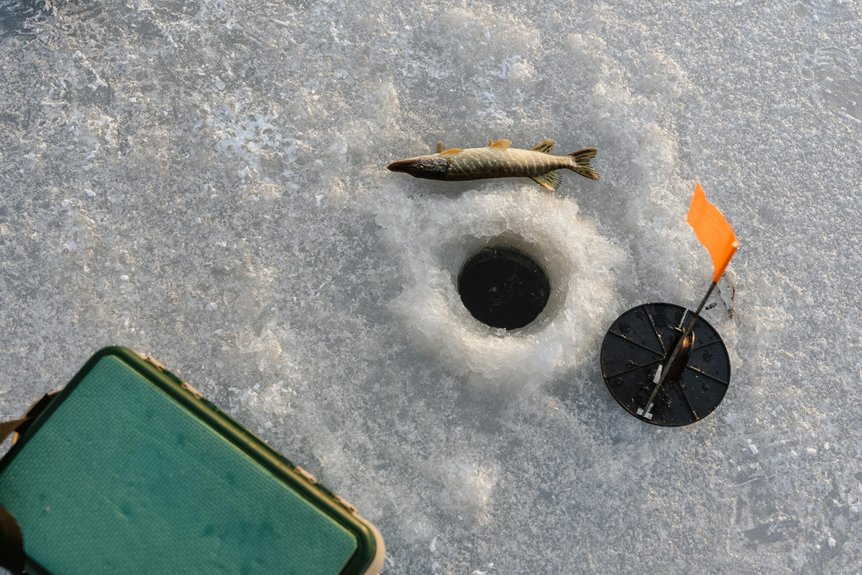
When temperatures drop and lakes freeze over, shifting your focus to ice fishing can open up new opportunities at Lake Minnetonka.
Before heading out, prioritize ice safety—check thickness, avoid cracks, and never fish alone. Make sure your gear is in top condition; inspect your auger, rods, and lines, and perform gear maintenance to prevent failures on the ice.
Dress in layers and wear a flotation device for added safety.
To find fish hotspots, target known structures like points, weed edges, and drop-offs, which tend to hold fish during winter.
Stay alert to changing conditions and keep an eye on the weather.
With proper gear, safety precautions, and knowledge of hot spots, you’ll increase your chances of a successful winter fishing trip.
Best Baits and Lures for Year-Round Success
To maximize your success on Lake Minnetonka year-round, selecting the right baits and lures is essential, as different species and seasons respond best to specific presentations.
Live bait, such as minnows, leeches, and worms, works well across many fish species and seasons, attracting bites with natural movement and scent.
Artificial lures, including crankbaits, jigs, and soft plastics, are versatile tools that can mimic prey and be tailored to conditions.
During spring and summer, flashy and vibrantly colored lures attract aggressive fish.
In colder months, subtle jigging with live bait or soft plastics can entice sluggish fish.
Mixing live bait with artificial lures increases your chances of catching a variety of species year-round.
Adjust your approach based on the season and target fish for consistent results.
Understanding Fish Behavior Across Seasons
Fish behavior on Lake Minnetonka changes considerably throughout the year, driven by water temperature, daylight hours, and spawning cycles. During spring, you’ll notice fish migrate to shallow areas to spawn, following predictable spawning patterns.
As summer arrives, fish often move to deeper, cooler waters to avoid heat stress, reducing your chances in shallow zones.
Fall triggers another migration, with fish returning to feeding areas to prepare for winter.
In winter, many species hibernate or stay in deeper waters, making them harder to target.
Understanding these fish migration patterns and spawning behaviors helps you time your trips better and choose the right locations.
Recognizing these seasonal shifts allows you to adapt your tactics and improve your success on Lake Minnetonka year-round.
Top Spots on Lake Minnetonka for Seasonal Fishing
Knowing where fish gather during different seasons makes a big difference in your success on Lake Minnetonka. During spring, focus on shallow bays and weed edges, where spawning fish are more active.
Summer hotspots include deeper channels and drop-offs, so bring your best fishing gear suited for deeper water.
Fall finds fish congregating near points and rocky structures, making these prime spots for seasonal fishing.
Proper boat maintenance guarantees your equipment works smoothly, especially when targeting specific locations.
Use sonar to locate schools and adjust your gear accordingly.
Staying aware of seasonal changes helps you choose the top spots, but always check local conditions.
With the right location, gear, and boat readiness, you’re set to maximize your catch all year round.
Adapting Your Approach to Water Temperature Variations
Water temperature plays a crucial role in how fish behave and where they gather on Lake Minnetonka. As water warms or cools, fish activity shifts, prompting you to adjust your tactics.
During colder months, fish tend to stay in deeper, insulated areas with stable temperatures, so focus on deep channels and drop-offs.
In warmer weather, they become more active and move toward shallower flats and weed beds.
Pay attention to water temperature changes throughout the day, as fish are more likely to bite during specific periods.
Use this knowledge to modify your bait choice, depth, and presentation.
Essential Equipment and Safety Tips for Each Season
No matter the season, having the right equipment and following safety precautions are essential for a successful and enjoyable fishing experience on Lake Minnetonka.
For all seasons, carry appropriate gear like sturdy rods, reels, and tackle suited for your target species. If you’re into fly fishing, ensure your waders and breathable clothing are in good condition.
Kayak fishing demands a well-maintained kayak, a life jacket, and a paddle float for safety.
In colder months, layer clothing to stay warm and dry. Always check weather forecasts before heading out and inform someone of your plans.
Keep a first aid kit handy, and carry navigation tools, especially if venturing into less familiar areas.
Proper equipment and safety awareness help you stay safe and make the most of every fishing trip.
Local Regulations and Licensing for Year-Round Fishing
To enjoy year-round fishing on Lake Minnetonka, it’s vital to understand and follow local regulations and licensing requirements. Before you cast your line, make sure you have the proper fishing licenses, which vary depending on your age and residency status.
Minnesota requires anglers to carry a valid fishing license for most species, and licenses can be purchased online or at local stores. Additionally, familiarize yourself with local regulations, such as size limits, bag limits, and seasonal restrictions, to avoid violations.
These rules are set to protect fish populations and maintain a healthy ecosystem. Ignoring regulations can result in fines or license suspensions.
Staying informed and compliant helps you fish responsibly and enjoy Lake Minnetonka all year.
Conclusion
No matter the season, Lake Minnetonka offers fantastic fishing opportunities. By adapting your techniques, baits, and gear to each season’s conditions, you’ll improve your chances of a great catch. To find the best fishing guides and tips, visit us online at [US Fishing Guides](https://www.usfishingguides.com). Stay safe, follow local regulations, and enjoy the natural beauty of the lake. With patience and the right approach, you’ll make the most of your fishing adventures year-round. Happy angling!
We write rarely, but only the best content.
